
Atoka Parole and Probation Compared
Parole follows release from an Oklahoma prison before the full sentence obligation has ended. The person lives outside prison under conditions and Oklahoma Department of Corrections supervision. Probation is court-ordered community supervision. It may replace a prison term, follow a jail or prison component, or form part of a suspended sentence. Both can require reporting and compliance, but they begin through different legal acts.
Neither term proves when someone walked out of a facility. The Atoka County District Court judgment supplies the basis for probation. A parole certificate or order, the ODOC status, and an Oklahoma Pardon and Parole Board result help establish parole. Someone discharged after completing a jail term may have neither. Likewise, a state prisoner transferred from Mack Alford Correctional Center to another ODOC prison has not been paroled simply because that person left the Atoka County facility.
| Point | Parole | Probation |
|---|---|---|
| How it starts | Conditional release from prison after the required process | A court orders community supervision |
| Primary legal record | PPB result and parole certificate or order | Judgment, sentence, or probation order |
| Who supervises | ODOC | ODOC for the supervision described in the matched record |
| What it does not prove | The exact physical release time | A prior prison stay or jail release time |
- Parole
- Conditional release from prison while the sentence remains subject to supervision.
- Probation
- Court-ordered supervision in the community, sometimes tied to a suspended sentence.
- Discharge
- The end of the controlling ODOC custody or supervision duty, subject to any other case.
- Absconder
- A supervision status indicating the person has failed to remain in required contact.
Verify Atoka Post-Release Supervision
Begin with the person, not the office. Use the official OK Offender Lookup and match the record with a DOC number when known. Otherwise compare the full name, date of birth, middle name, and court case details. Read the exact status and location or supervision wording. An abbreviated or missing result should be checked against the judgment because ODOC warns that lookup data may be incomplete.
The verification path should preserve the role of each agency. PPB considers parole and posts votes or results. ODOC manages corrections records and supervises parolees and probationers. The court judgment states the legal sentence. The Atoka office can give procedural help when the matched record points to local supervision, but staff may not disclose personal schedules, an officer assignment, a residence, or nonpublic conditions.
- Match the person in OK Offender Lookup. Save the DOC number, displayed status, and access date.
- Open the Atoka County case in OSCN. Read the filed judgment or relevant order, not just the charge line.
- If parole applies, compare the month’s PPB docket with the validated results and obtain the certificate or order when needed.
- Call the listed ODOC office only after the record indicates that office or Atoka-area supervision.
- Label every date. Eligibility, Board action, release, and supervision discharge do not mean the same event.
For a broader released-person records path, the Atoka County released inmate search separates Sheriff, ODOC, court, VINE, federal, and immigration sources.
Note: A person who bonded out of Atoka County Jail may never appear as an ODOC parolee or probationer.
Atoka Parole Office Coverage
The ODOC Probation and Parole Services office table lists an Atoka office serving both Atoka and Coal counties. That is the local procedural channel after an ODOC record or court order shows active supervision. It should not be used as a substitute for matching the correct person and case first.
182 East Court Street
Atoka, OK 74525
580-889-3561
The same long ODOC webpage has a separate subsection that places Atoka among “Inactive Counties.” Research did not establish that this separate label closes the listed Atoka office. It may refer to another program or suboffice table. Treat the live office row as the published contact, then call to confirm current office operation before a visit. This distinction is Atoka’s assigned supervision-office angle and prevents an isolated webpage label from being turned into a false closure claim.
The manifest image comes from that same official office source. Review the ODOC Atoka office listing before relying on the contact.
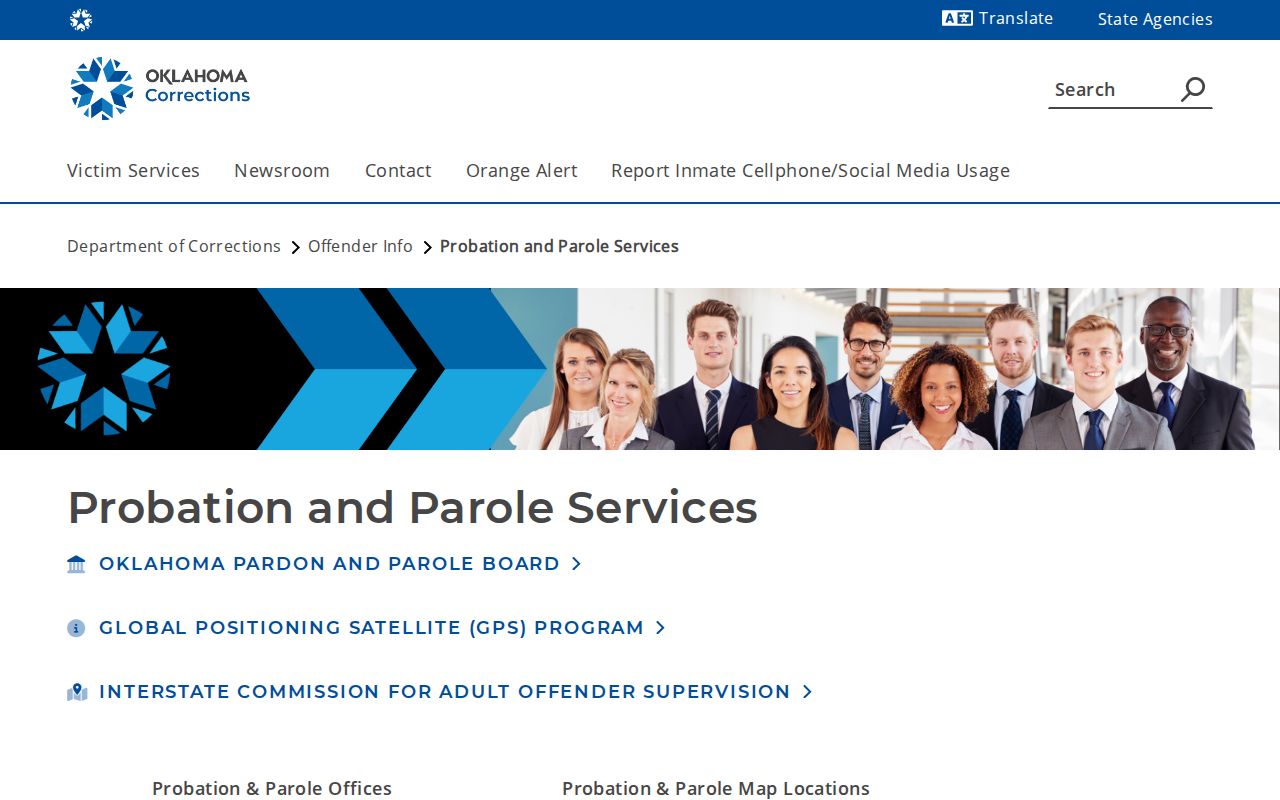
The captured listing supports the two-county service area and the local contact, while a current phone check resolves any later change.
Atoka Parole Dockets and Results
The Oklahoma Pardon and Parole Board generally meets each month. Its Board Meetings page carries current dates, agendas, minutes, location, and remote-access details. Those details change. A date found in old research should not be treated as the next meeting date. The live page controls.
Use the PPB Dockets and Results page in two stages. First, open the monthly docket to see scheduled names and the stated hearing type. Then open the matching results after validation. A docket only shows planned consideration. It is not a grant, release order, or proof that the person has departed Mack Alford, Howard McLeod, or any other ODOC institution.
Board outcomes may include a grant in a qualifying nonviolent matter, a recommendation to the Governor in a matter that requires executive approval, a pass to a later docket, or a denial. A majority favorable vote is three of five. Votes are not final until the last meeting day adjourns and the results are validated and posted. Even then, an approved plan, a detainer, another sentence, and release preparation may stand between Board action and physical release.
The official meeting-calendar image gives useful context. Check the current PPB meeting schedule for the active calendar.
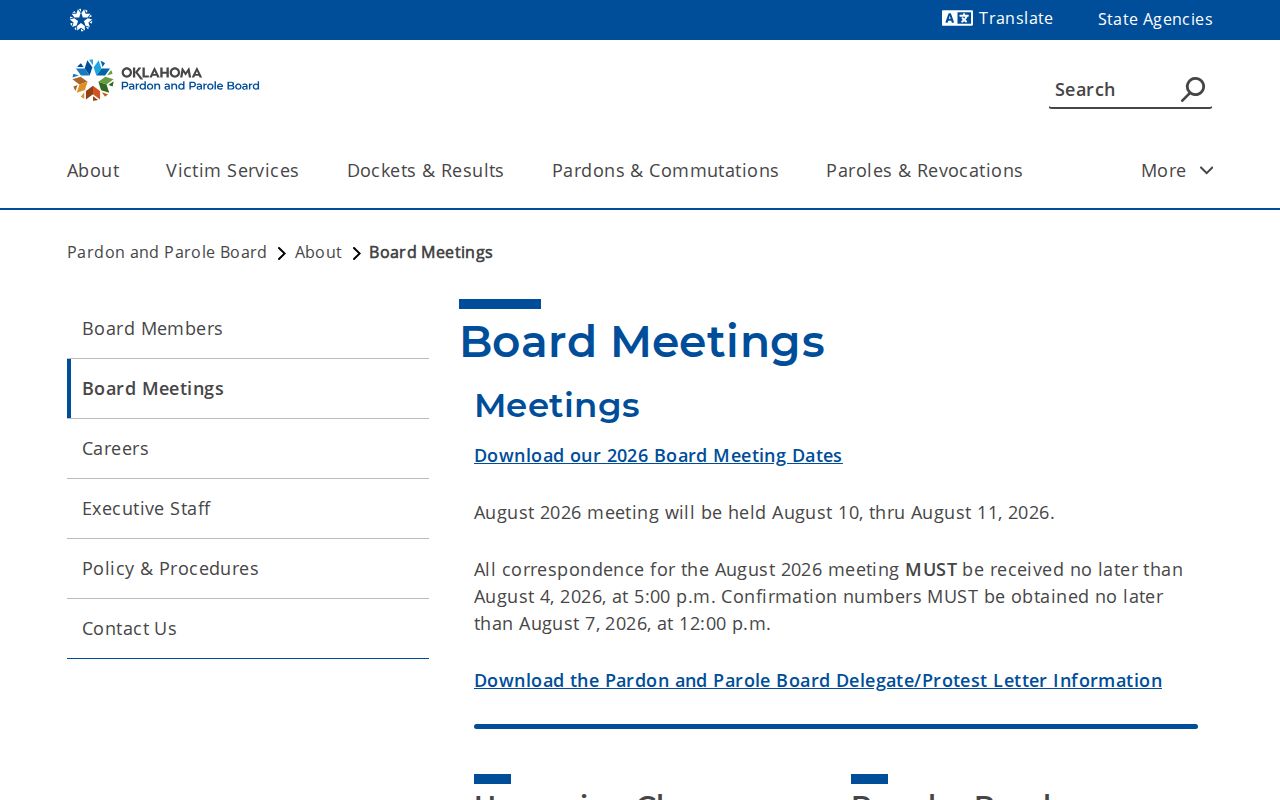
The calendar confirms where hearing dates originate, but the matching results record the later Board action.
Atoka Parole Release Timeline
A complete Atoka County parole timeline may contain several dates that look alike but carry different legal weight. The eligibility date marks when review may become possible under the controlling statute. The docket date marks planned Board consideration. The Board vote records the members’ action. A matter requiring executive approval then has a separate Governor stage. None is the same as the date ODOC completes physical release.
After a favorable final action, ODOC may still need an approved release plan and administrative preparation. A detainer can route the person to another custodian instead of the community. A new case or sentence can also change the path. For that reason, the current ODOC status and actual parole or release record must follow the PPB result in the evidence chain. VINE can add notice of the custody change, but the source record provides the formal event.
Supervision begins after parole release and can end on a different date. The parole certificate states the authority and conditions. ODOC records the supervision status and assigned office. A later discharge or termination notice shows the end of that controlling duty. Keep all three stages separate: Board decision, prison release, and supervision discharge. This prevents a planned hearing or favorable vote from being reported as a completed release.
Atoka Supervision Violations and Warrants
Conditions are the rules attached to parole or probation. Their exact terms come from the controlling certificate, judgment, or supervision record. A violation allegation does not erase the historical prison release, but it can lead to a warrant, revocation process, arrest, or return to custody. Revocation means an authorized decision that supervision has been withdrawn or changed because of a proven violation.
An absconder or warrant indicator is not routine discharge. The person may be outside a facility while still wanted under the supervision case. ODOC’s offender-information gateway lists Fugitive Warrants contacts at 405-425-2570 or 405-425-2571, toll-free 866-363-1119, and warrants@doc.ok.gov. No member of the public should approach or try to detain someone. Use official channels to report information or ask how the displayed status can be checked.
Old social posts and commercial wanted pages may remain after a recall or new court event. The current ODOC result and court docket take priority. OK VINE may give a later custody-change alert, but VINE does not replace the legal revocation record or a current warrant check. A record should be read in date order so an old violation is not presented as current.
Atoka Parole Discharge Records
Physical prison release and discharge from supervision occur at different points. Oklahoma law also permits some parole supervision time to be reduced through compliant months. Current 57 O.S. § 512.1 describes a credit of 30 calendar days toward parole-supervision reduction for each compliant month, with stated exclusions that include Section 13.1 cases and specified domestic-abuse convictions. The current statute and matched record control any individual date.
Do not calculate an end date from the prison release date alone. A notice of the current termination date, the ODOC status, and any Board notice provide better evidence. “Parole” means the person remains under conditions. “Discharged” generally means the controlling ODOC custody or supervision duty has ended, though another county, federal, tribal, or immigration matter may still exist.
A precise record chain reads: ODOC result, PPB result or certificate when parole applies, Atoka office confirmation if locally assigned, and the court judgment. It should separately name eligibility, the Board vote, Governor action where required, physical release, and final supervision discharge. That method avoids turning one favorable date into a claim that every legal restraint has ended.
Note: Confirm the statute version and the person’s conviction details before using any supervision credit in a date calculation.